PRIME MINISTER’S OFFICE REGIONAL ADMINISTRATION AND LOCAL GOVERNMENT
FORM THREE TERMINAL EXAMINATION
CODE: 033 BIOLOGY
TIME: 3HRS MAY, 2026
INSTRUCTIONS:
- This paper consist of A, B and C
- Answer all questions in Sections A, B and only two (2) questions from section C
- All writings should be in blue or black Ink, except for diagram that must be drawn in pencil.
- Cellular phone are not allowed in the examination room
SECTION A (15 Marks)
Answer All Questions
1. For each of the following items (i)-(x) choose the most answer from among the given alternatives and write in the box provided
i. A head office was educating the villagers about communicable disease and the mentioned the following diseases as example of communicable disease
- Cholera, meningitis and marasmus
- Tuberculosis, malaria and scurvy
- Scabies, influenza and diabetes
- Cholera, meningitis and Tuberculosis
- Cancer, Asthma and scabies
ii. Mr. Ndemanga’s son went to the hospital to ask for treatment due to outward banding of his leg is bones. This may be resulted by deficiencies of;
- Vitamin D
- Vitamin C
- Vitamin B
- Vitamin A
- Lipid
iii. Mr. Masunga’s daughter is suffering from kwashiorkor which food will you recommend to them?
- Milk, groundnuts, beans and meat
- Milk, Cassava, Sorghum and wheat
- Cabbage, Spinaches, Cassava and eggs
- Sorghum, Cassava, rice and yams
- Maize, bananas and sweat potatoes
iv. A person bite by a snake is advised not to take alcohol, why?
- Because can bite by another snake again
- Since the ant- venom won’t work
- He wants assists professionals to identify snake type
- Since will increase heart rate and spread of venom
- Because can bite by another big snake
v. Human body is very sensitive to both internal and external changes that can be explain in different ways which of the following is termed as allergy
- Body reaction to antigen that do not bother most people
- Body reaction against a specific drug
- Body reaction against a disease causing micro organism
- Accumulation of mucus by inhaling dust particles
- Formation of rasher caused by eating specific food
vi. Vascular plant has the specialized tissue for transportation of materials in different parts of the plant. Example what will happen if phloem tissues is destroyed in green plants
- Absorption of water in plant body will stop
- Absorption of minerals salts and water will stop
- Transpiration of manufactured water and food will stop
- Transportation of manufactured food will stop
- Transport of oxygen in plant will stop
vii. During respiration which substance is produced in mammals when food substance especially glucose is broken down in absence of oxygen
- Alcohol
- Lactic acid
- Carbon monoxide
- Oxygen
- Ethanol
viii. The third step in the scientific procedure is
- Experimentation
- Collecting data
- Identification problem
- Formulating hypothesis
- Conclusion
ix. After drinking bear a woman was seen to urinate frequently. What is the relationship between drinking beer and frequent urination?
- Beer adds more water to the tissue
- Beer contain alcohol which relaxes the urinary bladder muscles
- Beer contain alcohol which interferes with the function of anti-diuretic hormone (ADH)
- Frequent urination avoid getting drunk
- Beer transport large volume of water to the kidney
x. Why it is advised to build an incinerator in every hospital or health center?
- For collecting wastes
- For burning hazardous waste
- For disposing liquid waste
- For disposing plastic materials
- For keeping small animals
2. Match the description of the List A with their corresponding in List B by writing the letter of the correct responses beside the item number in answer sheet provided.
| LIST A | LIST B |
| i. A point where two bones meet and movement may occur ii. A type of muscle that bends a joint iii. A slippery substance that reduces friction in joints iv. A tough tissue that connects bones to other bones v. A tissue that prevents bones from rubbing against each other vi. A muscle that straightens a joint |
|
SECTION B (54 Marks)
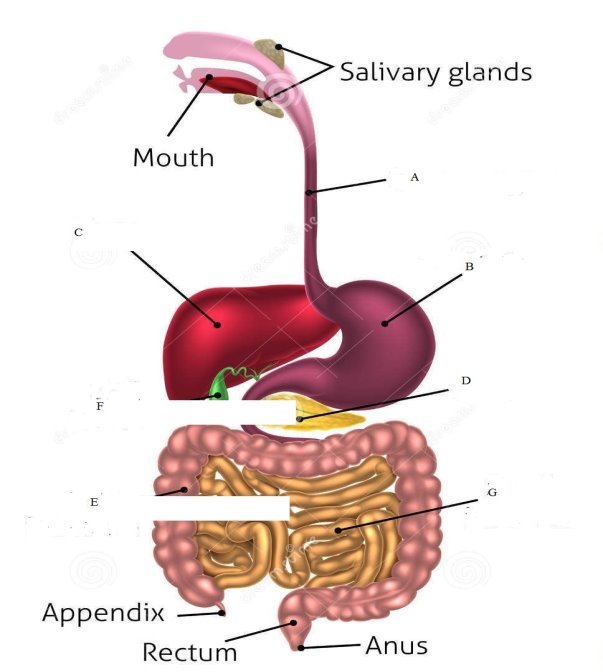
3. Study simple diagram below carefully and answer the questions that follows.

- Identify part X
- What will happen if the part M is severely damaged and fail to perform its role (state three points)
- Why salivary amylase (ptyalin) can not perform hydrolysis in the stomach?
- Briefly explain why pepsin is secreted in inactive form
4. a) Assume your biology teacher has asked you to state the roles of heart in the circulatory system, how will you respond that question? (Use three points)
b) Briefly explain how the structure and function of vascular tissues contribute to plant survival in different environments (use three points)
c) Explain how the malfunction of transport systems in human can affect body function and health (Give three points)
5. a) How explain HIV/AIDS weakens the immune system and increases the vulnerability to opportunistic infections
(b) Assess the impact of life style factors such as nutrition, stress and sleep on the effectiveness of the immune system
(c) How would you tabulate the differences between active immunity and passive immunity (give three points)
6. a) What do you understand the term Anaerobic respiration
(b) Explain three effects of smoking on the structure and function of the human respiratory system
(c) Write the chemical equation representing Aerobic respiration in mammals
7. (a) Suppose you were in the class during biology session, your teacher brought maize seedling and bean seedling that were used to explain different concepts concerned with those seedling. As a competent student taking biology subject explain.
- How do they differ (three points)
- How are they advantageous in your daily life? (three points)
(b) Explain the importance of biological classification in understanding biodiversity (three points)
8. a) Tow potted plants A and B were placed in the school laboratory for observations. Plant A was placed in a room with unilateral source of light and another plant B grown on land soil but when touched it closes its leaves
- What kind of response was shown by each plant A and B?
- Differentiate the response shown by each plant A and B?
(b) In three points, state why the plants do not locomote as animals?
SECTION C (30 Marks)
9. As a young biologist in your village, help your people by explaining all scientific methods (Procedures) to be followed in solving any problem which might face them so that they can be aware for finding solution by their own.
10. Assume you are invited to participate on world farmer’s day in your village and you are asked to talk about “biology” for development of agriculture and medicine farmer’s voice” prepare and write a speech in assay form concerning the potential of biology in Agriculture and medicine field (give three points)
11. Briefly explain why breast feeding is more preferable than to bottle feeding (give five points)
FORM THREE BIOLOGY EXAM SERIES 272
FORM THREE BIOLOGY EXAM SERIES 272
PRIME MINISTER’S OFFICE REGIONAL ADMINISTRATION AND LOCAL GOVERNMENT
FORM THREE TERMINAL EXAMINATION
BIOLOGY
Time 3:00 Hours MAY 2026
INSTRUCTIONS
- This paper consists of sections A, B and C with a total of total 11 questions
- Answer all questions in section A and B and two question in section C
- All writing should be in blue or black pen, except for diagrams that must be drawn in pencil
- Cellular phones and any unauthorised materials are not allowed in the examination room
SECTION A (16 MARKS)
1. Choose the correct answer in the questions
i) Are conditions or factors that can change or be changed in an experiment.
- Hypothesis
- Problems
- Variable
- Conclusion
- Experiment
ii) If you asked to prepare a first aid kit with its components, which of the following you will not include?
- Iodine tincture
- Sterilized cotton wool
- Medicine to care disease
- Pair of scissors
- Soap
iii) Viruses are considered to be non-living because . . . . . .
- They are only active in the contents of living thing cell
- They have true nuclei
- The body is covered by cell wall
- They are single cell eukaryotic organism
- They have cell wall
iv) Which of the following is a chemical substance that catches fire easily?
- Corrosive
- Flammable
- Oxidant
- Irritant
- Harmful
v) Which of the following diet should be added to the diet of lacting mother?
- Groundnuts
- Fish
- Cassava
- Orange
- Water
vi) The movement of bulk fluid materials along a vessel or tube is termed as……….
- Osmosis
- Diffusion
- Mass flow
- Transport
- Transpiration
vii) Which among of the following is not an infection and disease of the respiratory system?
- Asthma
- Bronchitis
- Pneumonia
- Emphysema
- Leukemia
viii) Eating of the forcefully removing the food from the body immediately is known as . . . . . .
- Obesity
- Marasmus
- Bulimia nervosa
- Kwasha kor
- Rickets
ix) A person who suffers from night blindness is likely to be lacking…………….
- Vitamin C
- Vitamin A
- Vitamin B12
- Vitamin D
- Vitamin B2
x) In order to avoid dislocation during movement two bones are hold together by strong tissues which are known as……………………
- Muscles
- Tendons
- Cartilage
- Ligaments
- Joint
2. Match the component of skeleton in LIST A with their corresponding component of skeleton in LIST B by writing the letter of the correct response beside the item number in the answer sheet provided.
| LIST A | LIST B |
|
|
SECTION B. (54MARKS)
3. When form one students visited biology laboratory, they found out different equipment which were not familiar to them. As a form three student, explain to the roles of the following equipment: -
- Mortar and pestle
- Glass watch
- Hand lens
- Measuring cylinder
- Test tube
- Test tube holder
4. (a) (i) name any four factors required for the formation of carbohydrate in plant
(ii) why is water an a essential part of our diet (any three points)
(b)(i) with an example in each case differentiate between hazardous and non-hazardous waste
(ii) Mention two proper ways of disposing waste.
5. The headmaster of MIKOCHENI Secondary School was served with hot coffee in a glass. He lifted up the glass of coffee and suddenly dropped it due to its extreme hotness causing it to break into pieces
- Name the action which took place in the headmaster’s body
- Suggest the name of the pathway followed during this action
- Draw a well labelled diagram showing components of the nervous coordination for the action which took place the headmaster’s body.
6. (a) outline three (3) similarities between angiospermophyte and coniferophyte
(b) Differences between division angiospermophyta and coniferophyta (3 points)
7. (a) it is not true that the function of human being skeleton is only to determine the shape like most of the people say. By using the knowledge of biology you have support the above statement with five point.
(b) State two different between skeletal muscles and cardiac muscle (c) what features of the joint enable it to reduce friction (two point)
8. (a) Suppose there are the following organisms in the ecosystem: Grass, Goat, Hen, Vulture, Grasshopper, Lizard and human being
- Construct a food web from the list provided organisms above
- From food web in which you construct which organisms are :-
- Producers
- primary consumers
- Secondary consumers
(b) Which important group of organisms should be included in the provided organisms to make the ecosystems balanced?
SECTION C
Answer only two (02) questions,
9. There are lot of microorganisms around us which can cause harm to our health. Justify with five (05) points on how our bodies defend themselves against them.
10. Your brother who is a fisherman caught many fish. Some fish were sold, other were given to friends and neighbors and some remained.
- What would you advice him in order to preserve the remained fish bearing in your mind that there is no electricity in his area.
- Explain three Advantages of ways used in 10 (a) above.
11. On his way home James heard a strong voice of lion. Describe the mechanism which enabled James to hear the voice.
FORM THREE BIOLOGY EXAM SERIES 271
FORM THREE BIOLOGY EXAM SERIES 271


FORM THREE BIOLOGY EXAM SERIES 220
FORM THREE BIOLOGY EXAM SERIES 220
PRESIDENT’S OFFICE, REGIONAL ADMINISTRATION AND LOCAL GOVERNMENT
SECONDARY EXAMINATION SERIES,
TERMINAL EXAMINATIONS
BIOLOGY FORM THREE
Time: 3Hours
Instructions
- This paper consists of sections A, B, and C with a total eleven (11) questions.
- Answer all question in the sections A, B and two (2) questions from section C.
- Section A carries sixteen (16) marks, section B fifty four (54) marks and section C carries thirty (30) marks.
- All writing should be in blue or black pen, except for diagrams that must be drawn in pencil.
- Communication devices and any unauthorized materials are not allowed in the examination room.
- Write your Examination Number on every page of your answer booklet (s)
SECTION A.
- For each of the following items (i-x).Choose the correct answer from given alternatives and writer its letter besides the item number in the answer booklet
- A patient arrives at the emergency room with severe blood loss. Which of the following actions is MOST important based on an understanding of blood circulation?
- Measure the patient's blood pressure.
- Admit the patient to a regular hospital room.
- Give the patient pain medication.
- Schedule the patient for an MRI scan.
- Unlike animals, plants transport materials throughout their bodies without a circulatory system. Which of the following processes is MOST important for transport in plants?
- Diffusion
- Active transport.
- Ingestion
- Muscular contraction
- Even though plants lack a nervous system, they can still respond to stimuli in their environment. Which of the following is an example of a plant's response to a stimulus?
- A flowering blooming at dawn.
- A plant secreting a sticky substance to trap insects.
- A plant growing taller towards sunlight.
- A vine plant twining around a support structure.
- Animals rely on both the nervous system and hormones for coordination. Which of the following statements accurately compares their roles?
- The nervous system provides slow, long-term responses, while hormones provide fast, short-term responses.
- The nervous system coordinates conscious actions, while hormones regulate unconscious actions.
- The nervous system transmits signals through the bloodstream, while hormones act directly on target organs.
- The nervous system only functions in complex animals, while hormones are present in all animals.
- The kidneys are vital organs in the excretory system. Why is understanding excretion important for maintaining overall health?
- Excretion removes excess water from the body.
- Excretion helps regulate body temperature.
- Excretion eliminates waste products that can be harmful if allowed to accumulate.
- Excretion aids in the digestion of food.
- Maintaining a stable internal environment is crucial for an animal's survival. What is the term for this concept?
- Homeostasis
- Adaptation
- Respiration
- Metabolism
- A scientist is examining a cell under a microscope and observes various structures within it. How can identifying these structures help them understand the cell's function?
- Different organelles have specific shapes unrelated to their function.
- The number of organelles within a cell is unrelated to its function.
- The structure of each organelle provides clues about its role within the cell.
- All organelles look similar under a microscope.
- During a field trip, students encounter an unfamiliar organism. Classifying this organism within Kingdom Plantae would be beneficial because it would likely tell them:
- The organism's reproductive method.
- The organism's specific diet.
- The organism's exact geographical location.
- The organism's potential danger to humans.
- The circulatory system and the excretory system work together to maintain a healthy balance in the body. How do these systems interact?
- The circulatory system transports blood waste to the excretory system for removal.
- The excretory system provides water for the circulatory system to function.
- The circulatory system regulates the excretory system's activity.
- The excretory system filters blood components within the circulatory system.
- Plant cells have unique structures like a cell wall and a central vacuole. How do these structures facilitate the transport of water and nutrients throughout the plant?
- The cell wall provides a rigid barrier that hinders transport.
- The central vacuole stores water, making it unavailable for transport.
- The cell wall allows for selective movement of water and nutrients, while the central vacuole stores excess water.
- The cell wall and central vacuole limit the movement of water and nutrients within the plant.
2. Match the items in LIST A with the responses in LIST B by writing the letter of the corresponding responses beside the item number.
| LIST A | LIST B |
|
|
SECTION B: 70 MARKS
Answer All Question
3. Kipendawatoto and his family during the holiday he visited Mikumi national park and on moving around the park, the following organisms were observed; Zebra, giraffe, lion, grasses, mushroom, hyena and antelope.
(a) Construct two (2) food chain from the organisms observed in the national park
(b) Construct a simple food web.
(c) Identify organism(s) which are
- Producer (s)
- Secondary consumer(s)
- Decomposer
4. (a) Explain why
(i) The rate of breathing increase quickly during exercise?
(ii) Is better to breathe through nose than through the mouse
(b) How are respiratory surfaces adapted to their role? (Give 5 points)
5. (a)A trauma patient has lost a significant amount of blood. How would understanding blood circulation help in treating this patient?
(b) Briefly explain how you can help a victim of snake
6.(a)Plants lack a circulatory system. Explain how plants transport water and nutrients obtained from the soil to all their parts.
(b). A flower was found to have conspicuous petals, scented and firmly held stigma and anthers.
(i). What is likely agent of pollination of the flower?
(ii). What is the significance of firmly held stigma in the flower?
7. (a)Although plants lack a nervous system, they can still respond to stimuli. Give an example of a plant's response to a stimulus and explain the mechanism behind it.
(b) State the adaptations of the leaf to photosynthesis
8. A bread was put in a wet cupboard. After few days black thread like structures which ended up in a club like structures appeared in the bread.
a) Write the common name of the organism that grew on the bread surface
b) Name the Kingdom and phylum in which the observed organism belongs
c) Outline four (4) advantages of the members of the Kingdom you mentioned in (b) above
9. (a)Compare and contrast the role of the nervous system and hormones in coordinating animal responses.
(b) Explain three processes that are involve in urine formation
10. The circulatory system and the excretory system work together to maintain a healthy balance in the body. Explain how these two systems interact to achieve this balance.
11. Explain how the structure of plant cells, specifically the presence of a cell wall and central vacuole, facilitates the transport of water and nutrients throughout the plant.
FORM THREE BIOLOGY EXAM SERIES 168
FORM THREE BIOLOGY EXAM SERIES 168
PRESIDENT OFFICE REGIONAL ADMNISTRATION
AND LOCAL GOVERNMENT
SECONDARY EXAMINATION SERIES
COMPETENCE BASED ASSEMENT
BIOLOGY FORM THREE
TERMINAL EXAMS MAY – 2023
033/1
Time: 3Hours
Instruction
- This paper consists of sections A, B and C with a total of thirteen (13) questions.
- Answer all questions in sections A and B and one (1) question from section C
- Except for diagrams that must be drawn in pencil, all writing should be in blue or black ink.
- Calculators, cellular phones and any unauthorized materials are not allowed in the examination room.
- Write your Examination Number on every page of your answer booklet(s)
SECTION A
- Choose the correct answer from the alternatives given below;
- Our muscles are attached to the bones at the joint by a strong tissue referred to as:
- Ligament
- Tendon
- Cartilage
- Connective tissue
- Skeleton.
- If a plant cell is placed in hypotonic solution, it experiences a biological condition called:
- Haemolysis
- Turgidity
- Crenation
- Plasmolysis
- Turgor pressure.
- Yeast is economically important because it is used in the baking process. This member of fungi is found in phylum:
- Ascomycota
- Zygomycota
- Basidiomycota
- Eumycota
- Bryophyta.
- In an experiment using a compound microscope, objects under observation were not seen properly due to poor light reflection. Which part of microscope will be affected?
- Diaphragm
- Mirror
- Objective lens
- Clips
- Course adjustment knob.
- When a fish is taken out of water can die because;
- It has no legs
- Its mouth is small to get the food on land
- Its gills are not able to exchange dry respiratory gases
- On land there are many enemies than in water
- The water on land flows faster than in rivers
- When a bird builds a nest on a tree, the bird benefits but the tree neither benefits nor loses. What type of relationship is shown by bird and the tree?
- Amensalism
- Parasitism
- Mutualism
- neutralism
- Commensalism
- A patient who has the following symptoms mild fever , slight abdominal pain , diarrhoea and vomiting is likely to be suffering from;
- Malaria
- Cholera
- Measles
- Tuberculosis
- Typhoid
- Disease which is common infection of the respiratory system is: -
- Tuberculosis
- Aids
- Malaria
- Cholera
- Typhoid
- One of the following is the principle of good manner
- Eating fast
- Speaking respectively
- Throwing food
- Wearing tight clothes
- Washing the body everyday
- Which food substance can be tested by using Iodinesolution?
- Protein
- Starch
- Carbohydrate
- Non reducing sugar
- Reducing sugar
- Match the description of the parts of skeleton in List A with corresponding Phrase/Terminology in List B by writing the letter of correct response beside item number in answer booklet.
| LIST A | LIST B |
| (i) Bi concave in shape, lack a nucleus (ii) Have irregular shape which respond to infections (iii) Fragments of cells produced in the bone marrow (iv) A fluid tissue consisting of white cells, red cells, platelets and plasma. (v) The fluid part of the blood. |
|
SECTION B. (70 MARKS)
Answer all questions in this section
3.(a) (i) What are the raw materials for photosynthesis
(ii) List one product of photosynthesis
(b)State how the ileum is adapted for absorption function.
4. (a) Explain the term Osmoregulation
(b) Briefly explain the mechanisms of regulating sugar level in the blood.
5. (a)In a human urine Sample, Some Sugar was detected during a laboratory test
- What is the likely name of the detected sugar?
- Name the hormone that was likely to be deficient in the body of the person whose urine was tested and the gland that produce it.
- Name the disease, that the person was likely to be suffering from
- What food would you recommend such a person to avoid.
(b)Explain why there is a great concentration of Urea in urine than in glomerular filtrate.
6. a) The acronyms AIDS, ARVs and HIV they are being used in hospitals and schools while most of people in the community they do not know the clear meaning of these acronyms. Assume you are the biology expert in your community make a clean meaning of these acronyms so that everybody can understand.
b) Our bodies are being protected against diseases and infections by different types of white blood cells. Explain the functions of the following types of white blood cells found in our bodies.
i. Neutrophils and monocytes
ii. Eosinophil’s and basophils
iii. B lymphocytes and T lymphocytes
7. a) Explain the following phenomena as used in biology.
i. Insulin and glucagon hormones work antagonistically
ii. In cold and humidity weather, human usually produce large quantity of urine that is colorless.
b) Nowadays people in world are suffering many diseases caused by poor waste disposal. By using knowledge that you have, explain three basic principle that will you use to minimize this problem in the world.
8. (a) With examples state the meaning of "Abiotic" and 'biotic" factors of the environment.
(b) (i)Differentiate the terms "food chain"from a Trophic level"
(ii) Construct the food web by using the following organism. Grass, gazelle, wildebeest, lion, decomposer, hyena, zebra and shrunk.
10. In an investigation, students set up the apparatus below in the laboratory and made observations after 72 hours.

Explain how inclusion of the following components would affect the mouse in the experiment:
- light (2 marks)
- Sodium hydroxide
10.
A person accidentally touches a hot pan and responds as illustrated in the diagram below.

- Explain how the response illustrated above occurs.
- Explain how auxins are utilised as selective weed killers in agriculture. (2 marks)
11. (a) Define the term analogous structures.
(b) Give two illustrations of analogous structures in mammals.
(c) Give two illustrations of analogous structures in mammals.
SECTION B. 15 MARKS
ANSWER QUESTION 12
12. Describe what happens to a meal rich in proteins along the alimentary canal from ingestion to egestion.
FORM THREE BIOLOGY EXAM SERIES 127
FORM THREE BIOLOGY EXAM SERIES 127
MINISTRY OF EDUCATION, REGIONAL ADMINISTRATION AND LOCAL GOVERNMENT
COMPETENCE BASED SECONDARY EXAMINATION SERIES
BIOLOGY 1 TERMINAL EXAMINATION
FORM THREE-2022
Time: 3Hours
INSTRUCTIONS.
- This paper consists of sections A, B and C with a total of fifteen (15) questions.
- Answer all the questions in sections A and B and two (2) questions from section C of which question number 13 is compulsory.
- Section A carries fifteen (15) marks, section B sixty (60) marks and section C carries twenty five (25) marks.
- All writing should be in blue or black pen, except for diagrams that must be drawn in pencil.
- Cellular phones and any unauthorised materials are not allowed in the examination room.
- Write your Examination Number on every page of your answer booklet(s).
SECTION A (15 Marks)
Answer All questions in this section.
1. For each of the items (i)-(x), choose the correct answer from among the given alternatives and write its letter beside the item number in the answer booklet provided.
- A structure which allows air to enter the trachea and prevent food from entering the wind pipe known as;
- Glotics
- Tongue
- Soft palate
- Mouth
- Epiglotics
- Study the following sequence of organism ;


 Grass Rabbit wolves’ fleas
The sequence is example of;
- Food web
- A pyramid
- Food chain
- Abiotic
- Lipase enzymes are mainly contained in;
- Hydrochloric acid
- Gastric juice
- Saliva
- Intestinal juice
- Pancreatic juice
- A person who is admitted in hospital after an operation, is most likely be advised to feed on food rich in ;
- Vitamin C
- Vitamin A
- Protein
- Lipids
- Water
- Which of the following is a vector for sleeping sickness?
- House fly
- Mosquito
- Tsetse fly
- Tick
- Cockroach
- The outermost living structure to identify a plant cell is;
- Cytoplasm
- Vacuole
- Cell wall
- Nuclear membrane
- Cell membrane
- One distinctive features of fungi is;
- Gill structure
- Hyphae
- Cellulose
- Cap
- Exoskeleton
- The main product of photosynthesis process is;
- Sun light energy
- Carbohydrate
- Carbon dioxide
- Water
- Oxygen
- True ribs are the first;
- 7 pairs
- 5 pairs
- 8 pairs
- 6 pairs
- 11 pairs
- Absence of flowers and fruits is a characteristics of;
- Monocots
- Dicots
- Conifers
- Vascular plant
- Cambium
2: Match the responses in LIST B with the phrase in LIST A by writing the letter of the correct response from LIST B besides the item number of LIST A in your answer sheet.
| LIST A | LIST B |
|
|
SECTION B (60 MARKS)
Answer ALL questions in this section
3. (a) Define what is accommodation?
(b) Describe the image formation
4 (a) Distinguish digestion from egestion as used in human biology
(b) Explain why during digestion, the food is:
(i) Alkaline when in duodenum
(ii) Acidic when in the stomach
(iii) Alkaline when in the ileum
5 (a) List any four characteristics of members of kingdom Plantae.
(b) (i) State the division in the kingdom in (a) above
(ii) Name one representative member for each division in (b) above.
6 State any three principles of waste disposal and give three importance of proper waste disposal.
7 Describe the long-sightedness disorder and how is corrected
8. Explain how the parts of the mammalian heart are adapted to their function.
9. (a) Explain the general effect of drug abuse and drug addiction
(b) List five ways of preventing drug abuse and addiction
10: Describe the symptoms of a person who is infected by Vibrio cholera and suggest six preventive measures and treatment for cholera outbreak.
11: (a) state any four functions of a human skeleton
(b) Describe the components of mammalian appendicular skeleton.
12.Describe the neuronic pathway taken by reflex actions in human being.
SECTION C (25 Marks)
Answer two (2) questions from this section. Question number 13 is a compulsory.
13. Explain two factors affecting gaseous exchange in animals.
14. Elaborate the causes of drug abuse to young people and advise the Tanzanian Government on the ways of combating drug abuse in the country.
15. (a) State the function of the following parts of the brain:
- Medulla oblongata
- Hypothalamus
- Cerebellum
- Cerebrum
(b) (i) Define the term “drug use”
- Explain three effects of drug abuse
- Explain two ways in which drug abuse can be controlled
FORM THREE BIOLOGY EXAM SERIES 82
FORM THREE BIOLOGY EXAM SERIES 82
MINISTRY OF EDUCATION, REGIONAL ADMINISTRATION AND LOCAL GOVERNMENT
COMPETENCE BASED SECONDARY EXAMINATION SERIES
BIOLOGY 1 TERMINAL EXAMINATION
FORM THREE-2021
Time: 3Hours
Instructions.
- This paper consists of section A, B and C with a total of 15 questions.
- Answer all questions in section A and B and TWO (2) question from section C in which question 13 compulsory.
- All writing should be in blue or black pen, except for diagrams that must be drawn in pencil.
- Cellular phones and any unauthorized materials are not allowed in the examination room.
- Write your number on every page of your answer booklet.
SECTION A (20 Marks)
Answer All questions in this section.
1. For each of the items (i)-(x), choose the correct answer from among the given alternatives and write its letter beside the item number in the answer booklet provided.
- Which nutritional disorder may result when a person takes larger quantities of carbohydrate than body's requirements?
- Rickets
- Marasmus
- Beriberi
- Kwashiorkor
- What is the role of the cerebrum in human beings?
- Breathing
- Sneezing
- Yawning
- Learning
- Walking
- In which specific part of the female reproductive system is tubal ligation applied as a method of birth control?
- Oviduct
- Uterus
- Cervix
- Ovary
- Vagina
- In the food chain: Grass
 Lion. A lion is:
- a primary consumer.
- a secondary consumer.
- a producer.
- a tertiary consumer.
- a decomposer.
- Water from the roots of flowering plants is transported up to the plant by different forces. Which of the following forces initiates and raises water to the least height?
- Root pressure
- Transpiration pull
- Cohesion forces
- Adhesion forces
- Capillarity
- A patient has been diagnosed with low level of blood sugar. Which hormone would you recommend to regulate the victims sugar?
- Insulin
- Glucagon
- Antidiuretic
- Aldosterone
- Testosterone
- The function of hydrochloric acid in food testing experiment is
- to decolourise food sample
- to test reducing sugar
- to oxidize the food sample
- to neutralize sugary foods
- to hydrolyze complex to simple sugar.
- The interaction between two species in which both organisms benefit is known as
- ectoparasite
- parasitism
- commensalisms
- mutualism
- endoparasite.
- Which of the following is NOT a component of First Aid Kit?
- Razor blade
- Panadol
- Bandage
- Soap
- Microscope.
- Which disease spread rapidly as a result of poor waste disposal?
- Anemia
- AIDS
- Cholera
- Leukemia
- Small pox.
2. Match the functions of the parts of microscope in List A with their corresponding parts of microscope in List B by writing the letter of the correct response beside the item number in the booklet provided.
| List A | List B |
| (i) Allows light to pass from the objective lens to the eye piece lens. (ii) Supports the eye piece and revolving nose piece. (iii) Raises or lowers the body tube in order to bring (iv) Raises or lowers the body tube in order to bring the image into focus. (v) Raises and lowers the stage to keep the specimen in right position for observation. |
|
SECTION B (60 Marks)
Answer all questions in this section.
3. (a) Differentiate the term "Biological apparatus" from "Biology Laboratory".
(b) Briefly explain why the following substances are dangerous?
- Toxic substances
- Highly flammable
- Corrosive substances
- Radioactive substances.
4. The diagram below illustrates a specialised cell obtained from a certain tissue.
(a) Name the cell.
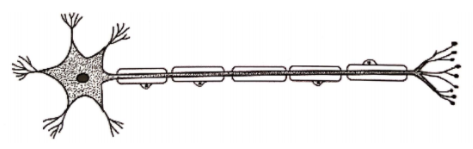
(b) State the ways in which the cell is structurally adapted to its function.
5. While investigating a certain metabolic process in plants, students set up the apparatus as shown below in a classroom and monitored it for 48 hours.
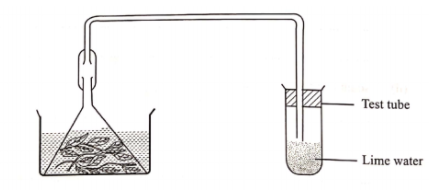
(a) Identify the metabolic process under investigation.
(b) Account for the observations made in the test tube at the end of the investigation.
6. The chart below illustrates how respiratory gases are transported in the human blood.
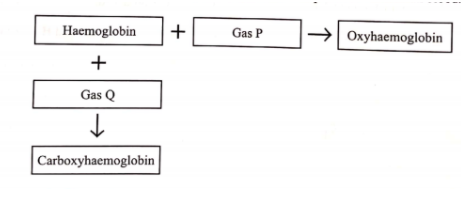
(a) Identify gas Q.
(b) Explain the advantage oxyhaemoglobin has over carboxyhaemoglobin.
7. ln an experiment, students treated seedlings as illustrated below.
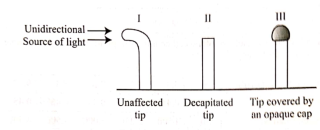
(i) Account for the observations made in seedling 1
(ii) Explain the similarity in the end results made in seedlings II and II
(iii) State the likely treatment that would make seedlings II and III respond like seedling I.
8. (a) Explain the distinctive features of the Division Filicinophyta.
(b) Draw a well labeled diagram of a fern plant.
9. A person accidentally touches a hot pan and responds as illustrated in the diagram below.
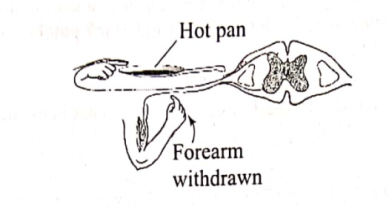
Explain how the response illustrated above occurs. (6 marks)
10. A group of font two students placed a fresh leaf in warm water. They observed that air bubbles formed on the surface of the leaf.
(a) What biological process were they investigating?
(b) Name the structures from which the air bubbles were coming from.
(c) Explain the distribution of the structures named in (b) above on the leaf surfaces of a land plant.
11. (a) State why it is important for plants to lose water to the atmosphere.
(b) State three activities in the human digestive system that depend on respiration.
12. The diagram below represents an organ in a bony fish.
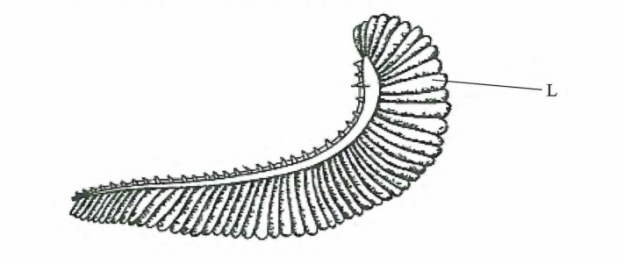
(a) Name the organ.
(b) Describe how air in water reach the capillaries inside structure L.
SECTION C (25 Marks)
Answer two (2) questions from this section. Question 13 is compulsory.
13. Describe what happens to a meal rich in proteins along the alimentary canal from ingestion to egestion.
14. Describe how the mammalian eye is structurally adapted to its function.
15. Using a relevant example in each case, describe simple and conditional reflex actions.
FORM THREE BIOLOGY EXAM SERIES 51
FORM THREE BIOLOGY EXAM SERIES 51
THE PRESIDENT’S OFFICE MINISTRY OF EDUCATION, LOCAL ADMINISTRATION AND LOCAL GOVERNMENT
BIOLOGY- TERMINAL EXAMINATION-MAY
FORM THREE
TIME: 3HRS
NAME: __________________________________ CLASS:___________
INSTRUCTIONS
i) This paper consists of three sections A,B and C
ii) Answer all questions in sections A and B, and one question in section C
iii) Ensure clarity in your responses
iv) Don’t attempt to cheat
SECTION A. 20 MARKS
1. (i) Regulatory control of the body temperature thirsty and hunger occurs in the
- Hypothalamus
- Cerebrum
- Thalamus
- Pituitary
(ii) Hypo secretion of growth in childhood would result to….
- Dwarfism
- Gigantism
- Death
- Hyperactivity
(iii) A student was given a piece of material of doubtful origin; he wanted to know whether it is from an animal or from a plant. Which of the following should be analyze and examine?
- The cytoplasm and cell membrane
- The nucleus and outermost covering
- The cytoplasm and outmost covering
- The nucleus and cell membrane
(iv) Plasmolysis of red blood cells would occur if the cells were
- In isotonic solution
- In hypotonic solution
- In hypertonic solution
- Non of the above
(v) The following are ascomycota except one identify it
- Cup fungi
- Penicillum
- Yeast
- Rhizopus stolonifer
(vi) The skin does all these except;
- Regulate temperature
- Produce blood cells
- Store fat
- Prevent you from ultra-violet rays
(vii) All are functions of saliva except;
- Digestion of starch
- Digestion of protein
- Lubrication of food
- Protection of bacteria
(viii) Which part constitutes an illuminating system?
- Diaphragm
- Mirror
- Condenser
- All of the above
(ix) Which of the following statements concerning diffusion and active transport is correct?
- Both require energy
- Neither requires energy
- Only diffusion requires energy
- Active transport requires energy while diffusion do not
(x) On a cold day one usually experiences, shivering, this is the way of maintaining normal body temperature. Why does one feel better after shivering?
- The muscles are coordinated
- The body responds to stimulus
- The body releases energy and heat
- The body has better adaptations
2. Match the responses in list B with the phrases in list A by writing the letter of the correct response from list B beside the item number of list A in your answer booklet.
| LIST A | LIST B |
| i) Receives impulses and gives appropriate response to stimuli ii)A gap through which impulses pass when travelling from one neuron to another iii) Receives impulse from the external stimuli and transmits it to the spinal cord iv) Controls and coordinate body balancing organs, thus making accurate movement possible v) The nervous pathway taken by impulse in reflex action |
|
SECTION B 60 marks
Answer all questions in this section
All questions carry 8 marks except question five and six which carry 6 marks each.
3. a)State three actions which take place in the human body in response to each of the following conditions:
i) When the temperature of the surrounding is low
ii) When the body temperature rises due to increase in surrounding temperature
b) Briefly explain why people took pale when they feel cold?
4. i) The diagram below represents a mammalian nephron
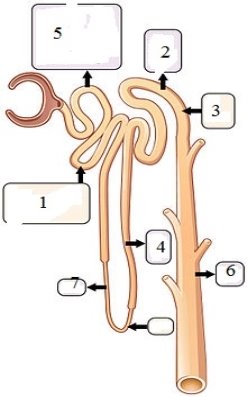
a) What happens to sodium ions between sections 1 and 2?
b) Explain the effect of the absence of the ant diuretic hormone to the functioning of section3
c) What would happen if there is partial constriction at point 5?
d) Explain the difference in structural adaptations of a desert animal such as kangaroo and a water fish such as tilapia nilotica.
ii) Study the diagram below and answer the question that follows
a) Name the structures labeled A,C,E, and F
b) State the function of structure labeled D
c) If structure F was removed from the body of the mammal, what effect would this have?
5. a)Define the term photosynthesis
b) Give the importance of photosynthesis
c) List four differences between respiration and photosynthesis
d) State the site of photosynthesis in a plant cell
e) What role is played by light during photosynthesis?
6. a)Explain the functions of the vascular system in plants
b) State three importance of transportation of materials in living things
7. The diagram given below represents a limb of a vertebrate
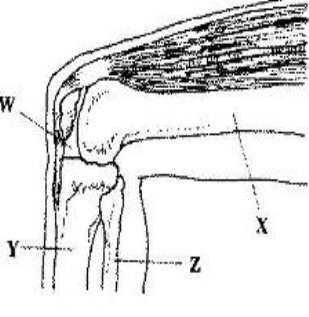
a) Name the bones labeled Y,X and Z
b) Name the parts D, and A
c) State the functions of W?
d) A patient was operated and doctors realized that the synovial fluid in the joints had reduced. Suggest a possible effect of this.
ii) The diagram below shows the behavior of red blood cells when placed in various solutions
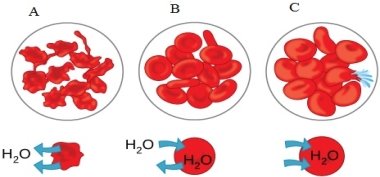
a) Name the process that takes place in C and F
b) What types of solutions are A,B and C
c) If a plant cell were placed in a beaker containing solutions A, what observations are likely to be made?
d) Which of the solution is likely to be found in a blood plasma?
8. a)Draw a large and neat labeled diagram of the villus found in the digestive system
b) i) Name the digestive juice which is produced by the liver
ii) State the function of the substances contained in the digestive juice named in b (i)
9. a)Differentiate the following terms:
i) Breathing and respiration
ii) Inhalation and exhalation
b) Briefly describe the following phenomenon:
i) A person breathes more when is running fast
ii) The ribs move outwards and upwards while the diaphragm flattened when air enters the lungs
SECTION C (20 MARKS)
Answer one (1) question from this section
10. Explain any four effect of irresponsible sexual behavior and suggest five ways of eradicating those behaviors in the community.
11. Describe how malaria parasites are transmitted, the sign developed to the host and give four ways which can help in combating malaria in the country.
12. Explain two differences between artificial and natural classification systems and indicate the two merits and demerits for each system.
FORM THREE BIOLOGY EXAM SERIES 12
FORM THREE BIOLOGY EXAM SERIES 12

DOWNLOAD LEARNING HUB APP NOW

SORRY, YOU CAN'T VIEW THIS MARKING SCHEME PLEASE DOWNLOAD LEARNING HUB APP FROM PLAYSTORE TO GET FULL ACCESS TO ALL MARKING SCHEME!!
Click Here To Download Learning Hub Tanzania App
SAMAHANI, HUWEZI KUFUNGUA MAJIBU YA MTIHANI, TAFADHALI PAKUA APP YA LEARNING HUB TANZANIA ILI KUWEZA KUFUNGUA MAJIBU YA MITIHANI KATIKA TOVUTI HII!!
Bofya Hapa Kupakua App Ya Learning Hub Tanzania
Hub App
 For Call,Sms&WhatsApp: 255769929722 / 255754805256
For Call,Sms&WhatsApp: 255769929722 / 255754805256  Matokeo Darasa VII 2025
Matokeo KIDATO CHA II 2024
Matokeo Darasa IV 2024
SECONDARY REGIONAL EXAMS
PRIMARY REGIONAL EXAMS
FORM VI NECTA REVIEWS
FORM IV NECTA REVIEWS
FORM II NECTA REVIEWS
STD VII NECTA REVIEWS
STD IV NECTA REVIEWS
SECONDARY EXAMS SERIES
PRIMARY EXAMS SERIES
PRIMARY SUBJECT NOTES
SECONDARY SUBJECT NOTES
SECONDARY TOPICAL EXAMS
SECONDARY TOPICAL QUESTIONS
PRIMARY TOPICAL QUESTIONS
PRACTICAL EXAMS & NOTES
SECONDARY REGIONAL EXAMS
DOWNLOAD SUBJECT NOTES
SCHEMES OF WORK (PRIMARY & SECONDARY)
LESSON PLAN
SECONDARY LOG BOOKS
PRIMARY LOG BOOKS
LITERARY WORKS / UCHAMBUZI VITABU
METHALI ZOTE ZA KISWAHILI
Vitendawili Vya Kiswahili
FORM VI RESULTS 2024
FORM FIVE SELECTION 2024
MATOKEO KIDATO CHA IV 2023
FORM ONE SELECTION 2024
FORM VI RESULTS 2023
Matokeo Darasa IV 2022
Matokeo Darasa VII 2025
Matokeo KIDATO CHA II 2024
Matokeo Darasa IV 2024
SECONDARY REGIONAL EXAMS
PRIMARY REGIONAL EXAMS
FORM VI NECTA REVIEWS
FORM IV NECTA REVIEWS
FORM II NECTA REVIEWS
STD VII NECTA REVIEWS
STD IV NECTA REVIEWS
SECONDARY EXAMS SERIES
PRIMARY EXAMS SERIES
PRIMARY SUBJECT NOTES
SECONDARY SUBJECT NOTES
SECONDARY TOPICAL EXAMS
SECONDARY TOPICAL QUESTIONS
PRIMARY TOPICAL QUESTIONS
PRACTICAL EXAMS & NOTES
SECONDARY REGIONAL EXAMS
DOWNLOAD SUBJECT NOTES
SCHEMES OF WORK (PRIMARY & SECONDARY)
LESSON PLAN
SECONDARY LOG BOOKS
PRIMARY LOG BOOKS
LITERARY WORKS / UCHAMBUZI VITABU
METHALI ZOTE ZA KISWAHILI
Vitendawili Vya Kiswahili
FORM VI RESULTS 2024
FORM FIVE SELECTION 2024
MATOKEO KIDATO CHA IV 2023
FORM ONE SELECTION 2024
FORM VI RESULTS 2023
Matokeo Darasa IV 2022